Ultrasound (USS) uses high frequency sound waves to produce pictures of the inside of our bodies. Unlike X-rays, USS does not involve the use of radiation and is usually a safe, painless and quick imaging test. USS is a live, real-time scan where both static and dynamic images or videos can be produced.
Diagnostic Tests
At W27 Imaging, we offer a range of advanced diagnostic tests to help identify the root cause of musculoskeletal pain and guide effective treatment. Our services include diagnostic spinal injections, MRI, CT scans, and X-rays. These tests are used to provide accurate, detailed images or responses to pinpoint the source of discomfort—whether in the spine, joints, or soft tissues. By working closely with referring healthcare professionals, we ensure each test plays a crucial role in confirming a diagnosis and tailoring the most appropriate care plan for you.

X-Ray
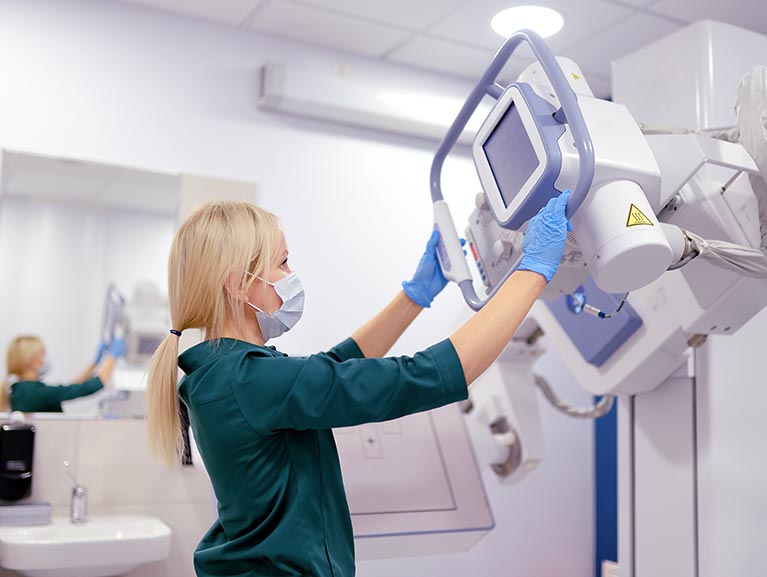
X-rays are a way of producing detailed images of the inside of your body, such as your bones and joints. They use a type of radiation that passes through your body and gets absorbed by different types of tissue to form pictures of the body. X-rays are painless however they carry a very small risk due to your exposure to radiation.
CT Scan
A CT (computerised tomography) scan uses ionising radiation which passes through your body to create multiple, detailed images of the insides of your body. You lie on a table which passes through the CT scanner in a matter of seconds, and produces cross-sectional images which can then be used to reformat images in multiple planes.
MRI Scan
MRI (magnetic resonance imaging) scans essentially use a magnetic field and radio frequency energy to help produce detailed images of the insides of your body. The scanner is a large tube that surrounds your entire body, with newer-scanners available that allow more space inside.
Diagnostic Arthrogram Injections
Diagnostic injections can help your doctor to pinpoint the exact source of your pain. They complement scans like X-rays, MRI and CT scans which provide detailed imaging of joints and the surrounding soft tissues. Arthrogram injections essentially involve injecting contrast dye into symptomatic joints usually under X-ray or Ultrasound guidance.